
The Mongolian ger is far more than a dwelling — it is a sophisticated nomadic home perfectly adapted to life on the open steppe. Designed for mobility, resilience, and harmony with nature, the circular felt structure can be assembled or dismantled within hours, allowing herder families to move seasonally with their livestock in search of fresh pasture. For centuries, this portable architecture has enabled Mongolia’s pastoral culture to thrive across vast and often harsh landscapes.
Step inside a traditional ger and discover the warmth, symbolism, and daily rhythms of Mongolia’s nomadic home.
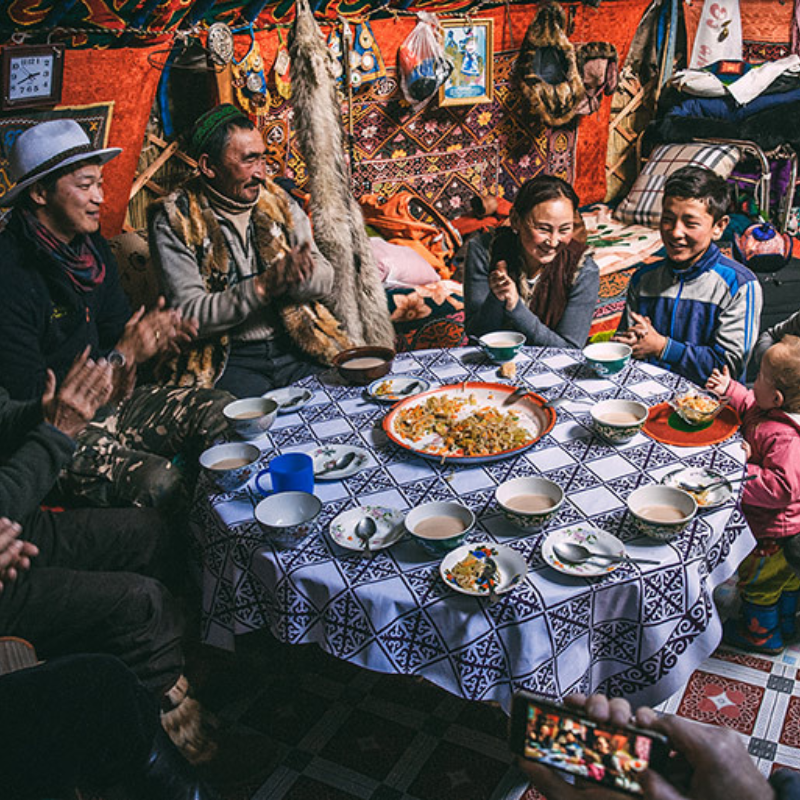
Life inside the ger follows a deeply rooted spatial order and cultural etiquette. The central stove provides warmth and serves as the heart of the household, while furnishings and bedding are arranged along the circular walls according to family roles and tradition. Guests are welcomed with milk tea and homemade dairy foods, and daily activities — cooking, mending, storytelling, and craftwork — unfold within this intimate communal space. The experience offers rare insight into how nomadic families balance simplicity, functionality, and cultural symbolism in their domestic life.
Staying in a ger offers a unique sense of closeness to both people and landscape. Without permanent walls or urban barriers, the rhythms of nature remain ever present — wind across the grasslands, livestock moving nearby, and the changing light of the steppe filtering through the roof crown. Evenings are often spent around the stove, sharing food and conversation, while mornings begin with the quiet routines of pastoral life.
For travelers, ger life provides not only accommodation but cultural immersion. Observing daily household practices, participating in simple tasks, and sharing time with host families fosters meaningful connection and understanding of Mongolia’s living heritage. It is an experience that reveals the ingenuity, resilience, and enduring traditions of nomadic society — a way of life shaped by movement, community, and deep respect for the natural world.

No comment